

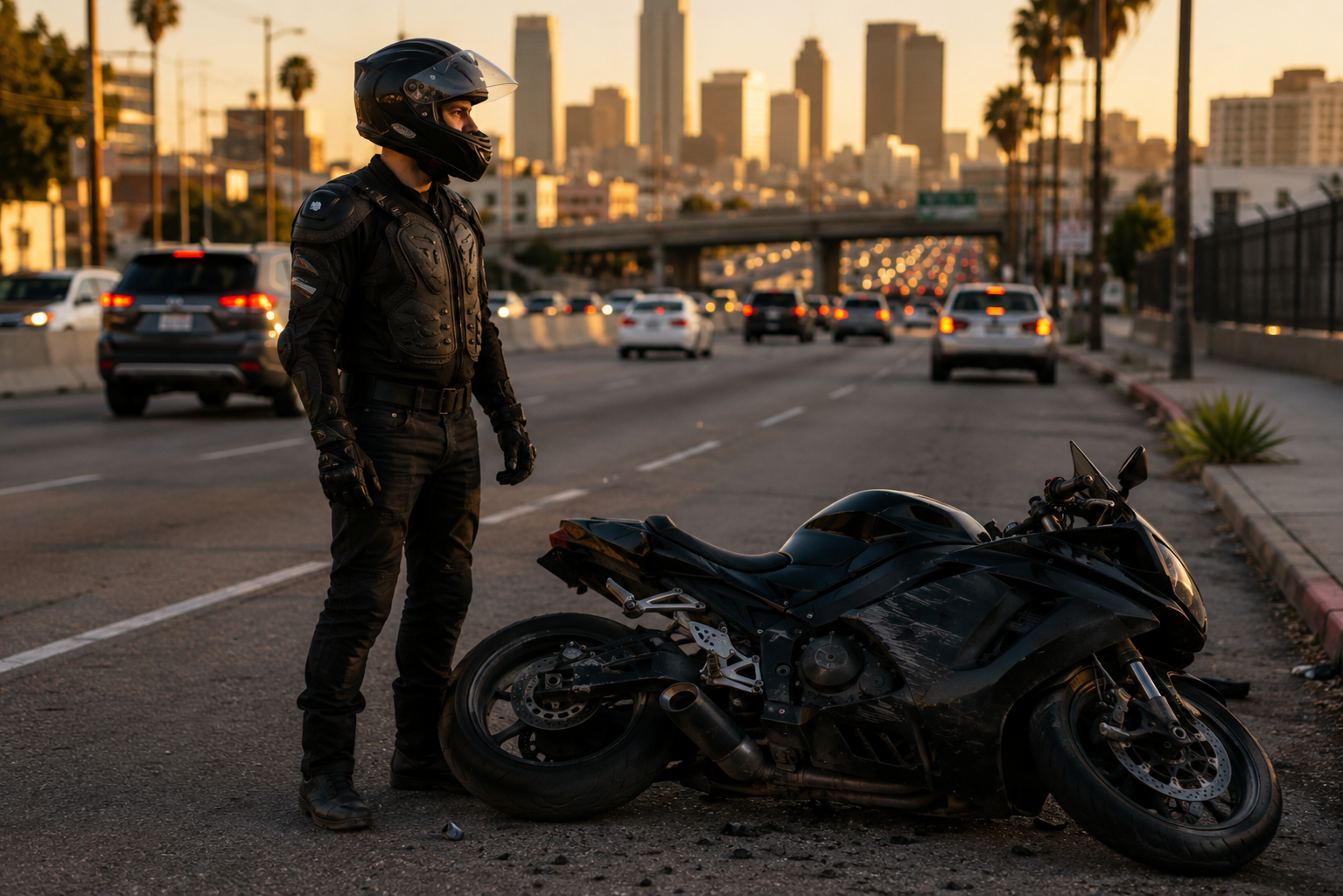
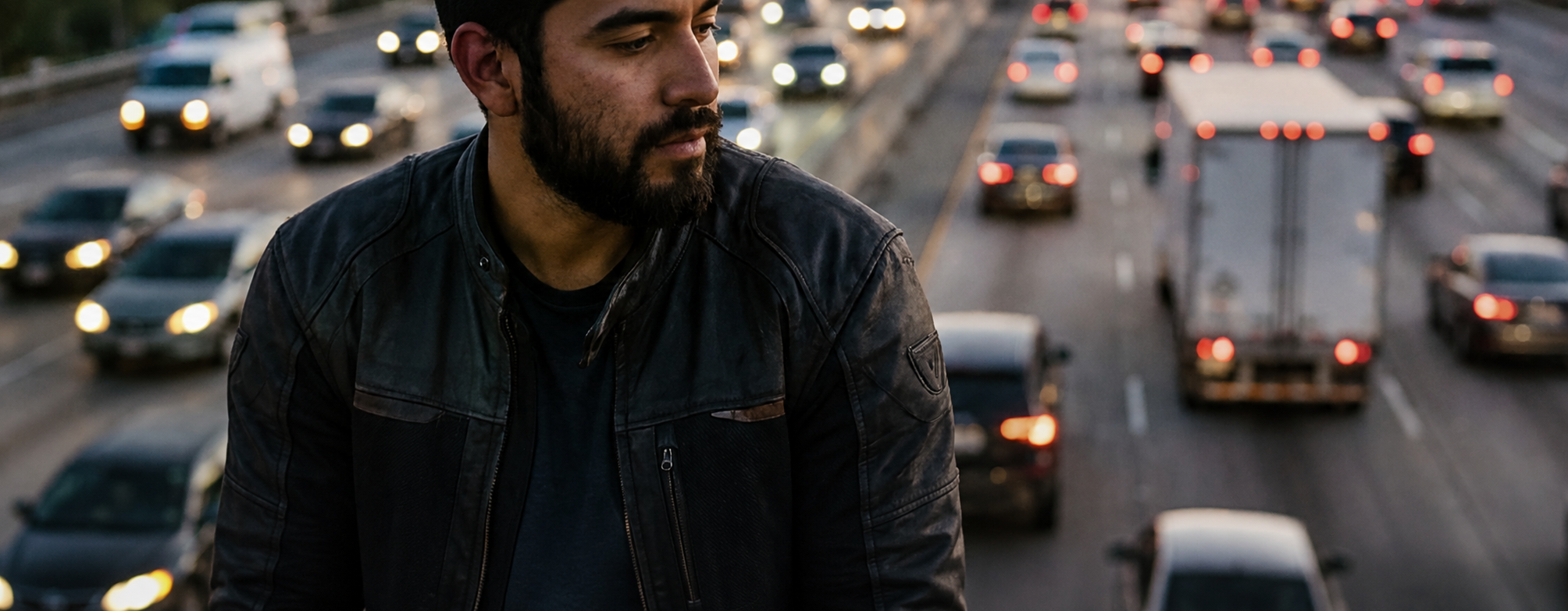
CALIFORNIA MOTORCYCLE ACCIDENTS
AFTER THE IMPACT
THE CRASH
HAPPENED
IN SECONDS.
WHAT YOU
DO NEXT
CAN MATTER.
The immediate priority is safety and medical care. After that, preserving information about what happened can become important.
If possible and safe, move away from active traffic and avoid creating another hazard.
Contact emergency services when the circumstances require it.
Motorcycle injuries are not always obvious immediately after a collision.
When physically able and safe, photographs and other information may help preserve what happened.
Obtain relevant driver and insurance information.
Keep photographs, medical records, damaged riding equipment and other potentially relevant materials.
Avoid guessing about injuries or responsibility when the facts are still developing.

THE ROAD KEEPS MOVING.
YOUR RECOVERY MAY TAKE TIME.
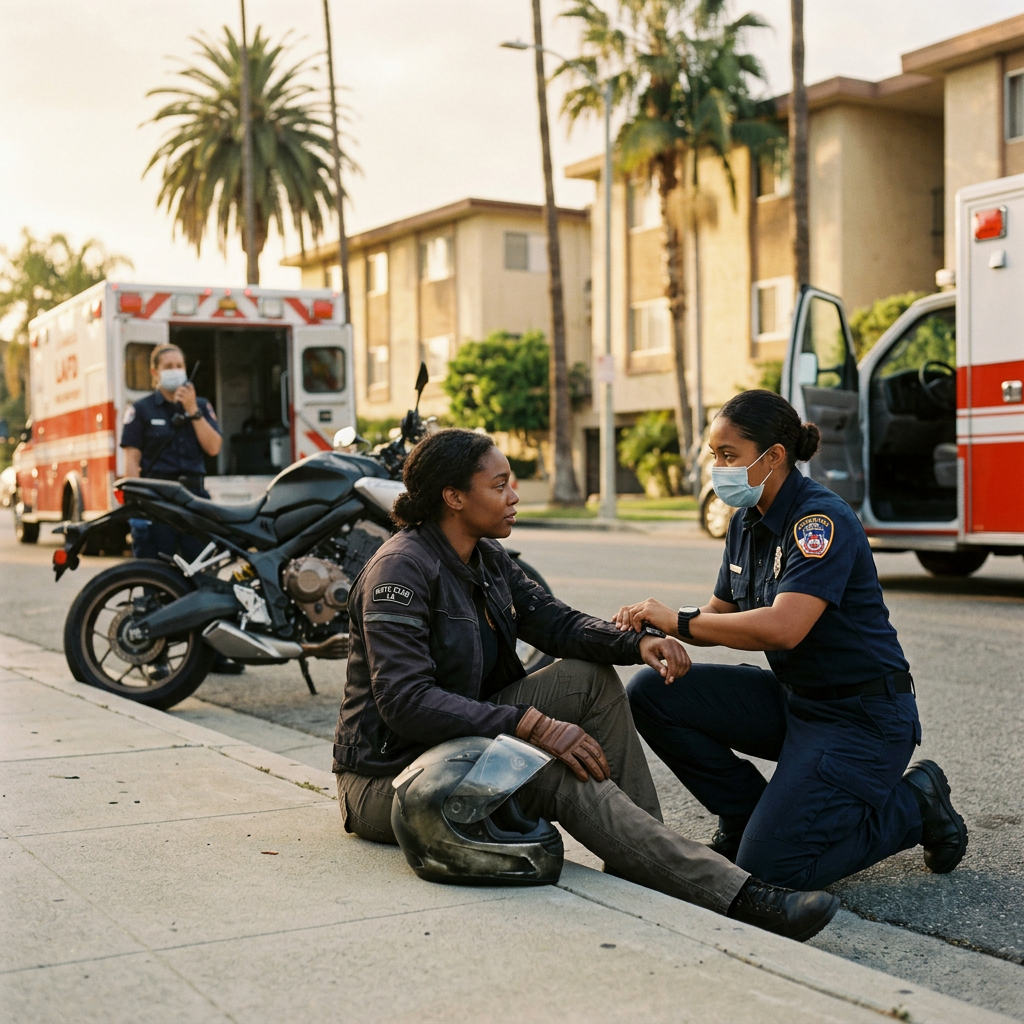
YOUR HEALTH FIRST
Motorcycle accidents can involve injuries that are not fully understood immediately. Pain may develop later, and trauma can include head injuries, orthopedic injuries, road rash, fractures, soft-tissue injuries and other conditions. Appropriate professional medical evaluation can help assess what happened. This page does not diagnose injuries or provide medical treatment instructions.
THE MOTORCYCLE
CAN BE REPLACED.
YOUR HEALTH CANNOT.
THE MOTORCYCLE
THE OTHER VEHICLE
THE ROADWAY
TRAFFIC SIGNALS
SKID MARKS OR DEBRIS
VISIBLE DAMAGE
YOUR RIDING EQUIPMENT
WITNESS INFORMATION
DON'T OVERLOOK THE BIKE
The condition and damage to the motorcycle may potentially help document aspects of the collision. Do not interfere with an investigation or assume the motorcycle alone establishes fault. Preserve it carefully and ask for guidance about any inspection or repair.
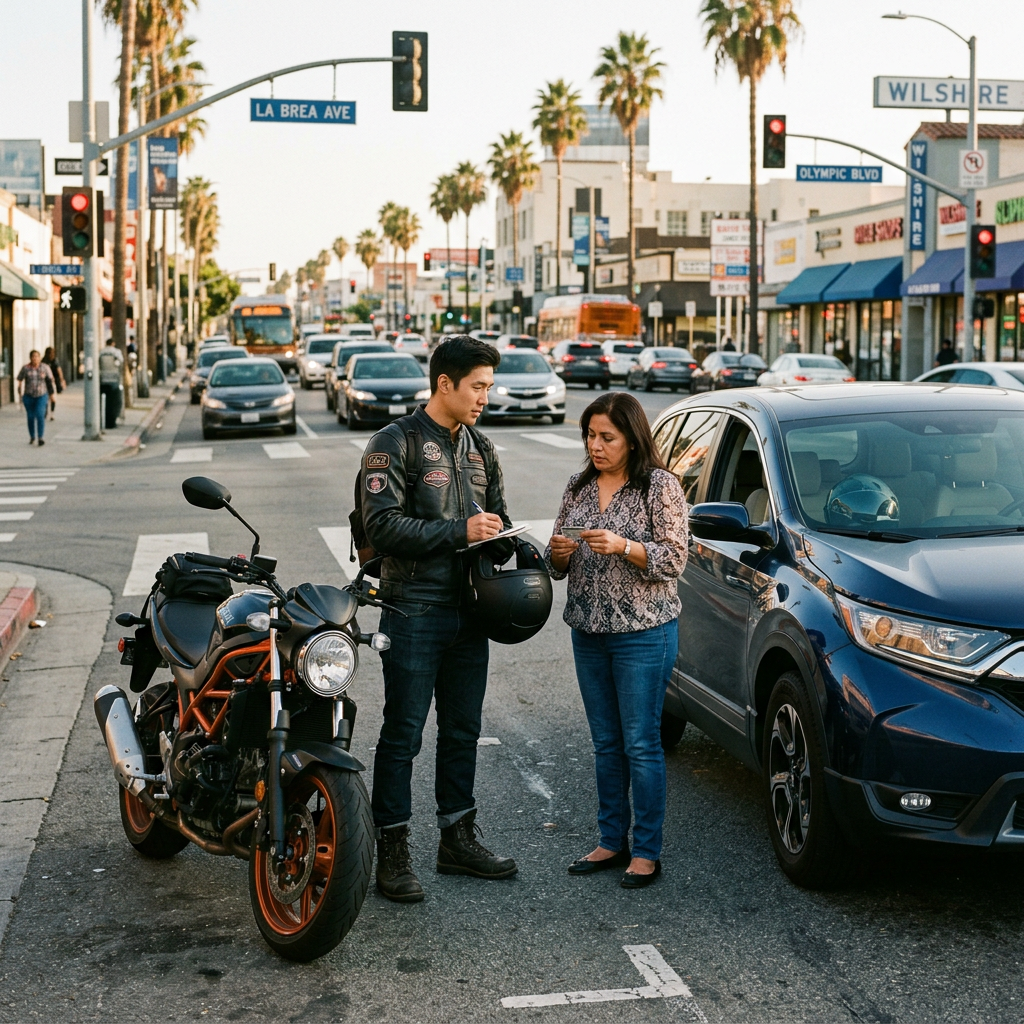

THE INSURANCE CONVERSATION
YOU DON'T
HAVE TO KNOW
THE FULL EXTENT
OF YOUR INJURIES
ON DAY ONE.
Some injuries and their effects become clearer over time. Be accurate when discussing what happened and avoid speculation about injuries, recovery or responsibility.
FAULT CAN BE DISPUTED
Being on a motorcycle does not automatically make a rider responsible for a collision. Fault should be evaluated using the facts and available evidence, including witness statements, photographs, video, vehicle damage, roadway evidence, traffic controls, police documentation and other relevant information. California’s comparative-fault rules can affect a claim in different ways depending on the evidence, so conclusions should be made carefully.

THE DAMAGE TELLS PART OF THE STORY.
THE EVIDENCE TELLS MORE.
WHAT YOU WERE WEARING
Helmets, protective clothing and other riding equipment may sometimes become relevant to understanding injuries or the circumstances of the collision. The absence of particular equipment does not automatically eliminate a claim, and California law should not be overstated without considering the specific facts.
Bills and care connected to accident-related injuries, depending on the facts.
Treatment or support that may be reasonably expected, when supported by evidence.
Income missed because injuries affected your ability to work.
A possible change in future ability to earn, where the evidence supports it.
Damage to the motorcycle, riding gear and other property.
Nonfinancial effects of an injury, evaluated under applicable law.
Other losses may be considered depending on the circumstances.
RIDING IN LOS ANGELES
Dense freeway traffic, urban intersections, lane changes, commuting traffic, commercial vehicles, pedestrians and cyclists all shape the riding environment in Los Angeles. Road conditions and Southern California traffic patterns can change quickly. Those details can matter when reconstructing what happened, but each collision must be evaluated on its own evidence.
Prioritize safety and call emergency services when needed. Seek appropriate medical evaluation, exchange information, and document what you can safely preserve. Avoid speculation about fault or injuries while facts are developing.
Appropriate professional medical evaluation can be important because some pain or other symptoms may become clearer later. A medical professional can assess you; this article does not diagnose or recommend treatment.
Keep photographs, contact information for witnesses, medical records, insurance correspondence, repair estimates and damaged riding equipment. Preserve materials rather than altering or discarding them.
Preserve the motorcycle and avoid repairs or changes when reasonably possible until you understand whether it may be relevant. Do not interfere with an investigation; ask a lawyer or insurer about safe next steps.
A statement at the scene does not by itself establish responsibility. Fault may be evaluated through photographs, witnesses, vehicle damage, roadway evidence, traffic controls and other records.
California generally uses a comparative-fault approach, but the effect depends on the facts and applicable law. A person’s share of responsibility may affect recovery; it does not automatically answer every claim.
Equipment can be relevant to understanding injuries or the collision, but the absence of particular gear does not automatically eliminate a claim. The effect depends on the evidence and applicable law.
Be accurate and avoid guessing about injuries, recovery or responsibility. You may want legal advice before making statements or signing documents, especially where injuries or coverage are disputed.
There is no single timeline. It can depend on medical recovery, evidence, insurance coverage, disputed responsibility and whether a lawsuit is involved.
Consider a conversation when injuries are significant, responsibility or coverage is disputed, multiple vehicles are involved, work is missed, treatment may be long-term, or accounts of the collision conflict.
KNOW WHAT COMES NEXT
If you were injured in a motorcycle accident in Los Angeles or Southern California, CD LAW can review what happened and help you understand your legal options.
No Fee Unless We Win