

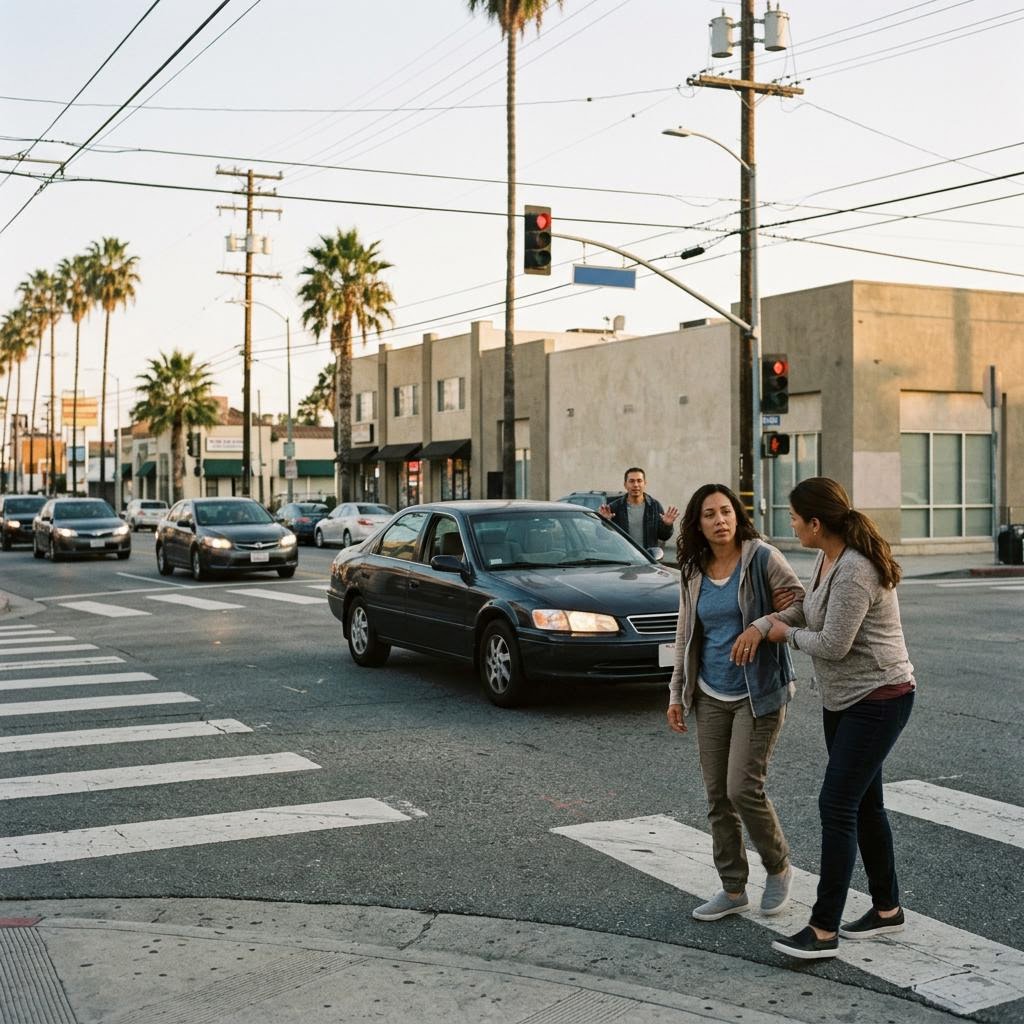
California pedestrian accidents

What Happens After a Pedestrian Is Hit by a Car in California?

The collision may happen in seconds. What happens afterward can affect your health, the evidence and the insurance claim that follows.

CD LAW · LOS ANGELES PERSONAL INJURY

An editorial guide to the minutes, hours and days after impact

The first few minutes

THE CAR
HAS STOPPED.

THE ACCIDENT
HAS NOT.

A pedestrian collision can begin a much longer process involving medical treatment, evidence, insurance companies and questions about responsibility. What happens immediately afterward can matter.

At the scene

What Should You Do After Being Hit by a Car?

01

GET TO SAFETY

If possible and medically appropriate, move away from additional traffic danger.

02

CALL FOR EMERGENCY HELP

Serious or uncertain injuries may require emergency medical attention. Law enforcement documentation may also become important.

03

IDENTIFY THE DRIVER

Obtain available identifying and insurance information when circumstances allow.

04

LOOK FOR WITNESSES

People who saw the collision may later help clarify what happened.

05

DOCUMENT THE SCENE

When safely possible, photographs or other documentation may preserve details that disappear quickly.

06

GET MEDICAL ATTENTION

Some injuries may not be fully apparent immediately after a collision.

SECONDS
CHANGE
EVERYTHING.

WHAT HAPPENS
NEXT MATTERS.

Not every injury is immediate

Why Medical Evaluation Can Matter After a Pedestrian Accident

Pedestrians have little physical protection when struck by a vehicle. Potential injuries can vary widely and may involve the head, neck, back, shoulders, arms, legs, knees, soft tissue and other areas. Symptoms and recovery vary from person to person.

A medical evaluation can create a clearer record of what you are experiencing and what care may be appropriate. This article does not diagnose injuries or predict recovery.

A timeline of what may follow

One thing leads to another.

01

THE COLLISION

The moment that starts a longer chain of events.

02

THE MEDICAL EVALUATION

Care and documentation may help clarify what comes next.

03

THE EVIDENCE

Details can disappear, change or become harder to locate.

04

THE INSURANCE CLAIM

Coverage and responsibility may be investigated.

05

THE RECOVERY

Recovery is personal, and rarely follows a perfect line.

06

THE LEGAL EVALUATION

A fact-specific review can help identify available paths.

Fault is fact-specific

Who May Be Responsible for a Pedestrian Accident?

Responsibility depends on circumstances: traffic signals, crosswalk location, vehicle speed, driver attention, visibility, right-of-way issues, witness accounts, photographs, video evidence and police documentation. Drivers are not automatically responsible in every collision; the evidence must be examined.

What the driver says

“I DIDN’T
SEE THEM.”

Illustrative example only, not a CD LAW case.

What the evidence may show
intersection layout
visibility
vehicle position
photographs
witnesses
video
traffic controls
physical evidence
Fault should be evaluated from the evidence, not simply from one person’s version of what happened.
The scene changes

Evidence From a Pedestrian Accident May Not Stay Available Forever.

TRAFFIC CAMERA FOOTAGE

Some footage may be overwritten or unavailable with time.

SURVEILLANCE VIDEO

Nearby businesses or residences may hold useful context.

WITNESSES

Names and accounts can be harder to locate later.

VEHICLE DAMAGE

Physical marks may help explain the collision.

PHOTOGRAPHS

The road, lighting and positions can change quickly.

ROAD CONDITIONS

Weather, visibility and the roadway may matter.

MEDICAL DOCUMENTATION

Treatment records help describe the care received.

POLICE RECORDS

Reports may preserve early observations and accounts.

Evidence availability varies; some evidence may become more difficult to obtain with time.

TRAFFIC
MOVES ON.
RECOVERY
TAKES LONGER.

The claim process

What Happens When Insurance Gets Involved?

Insurers may investigate how the collision occurred, responsibility, injuries, medical treatment, financial losses, available coverage and supporting documentation. An insurer’s evaluation does not automatically determine the legal value of a claim. Coverage and compensation should never be promised without examining the facts.

The full impact

What Damages May Be Considered After a Pedestrian Accident?

01MEDICAL EXPENSES
02FUTURE MEDICAL CARE
03LOST INCOME
04REDUCED EARNING CAPACITY
05PAIN AND SUFFERING / NONECONOMIC HARM
06OTHER QUALIFYING ACCIDENT-RELATED LOSSES
Recoverable damages depend on the facts and applicable law.

One collision

THE DRIVER
MAY DRIVE AWAY.

THE PEDESTRIAN
MAY BE DEALING
WITH THE EFFECTS
FOR MUCH LONGER.

Disputed responsibility

What If the Driver Says the Pedestrian Was at Fault?

California allows responsibility to be evaluated based on the conduct of the people involved. Being accused of contributing to an accident does not, by itself, answer whether compensation may be available. The evidence and specific circumstances matter.

Related topic: What Happens If I’m Partially at Fault for an Accident in California?

Los Angeles pedestrian accidents

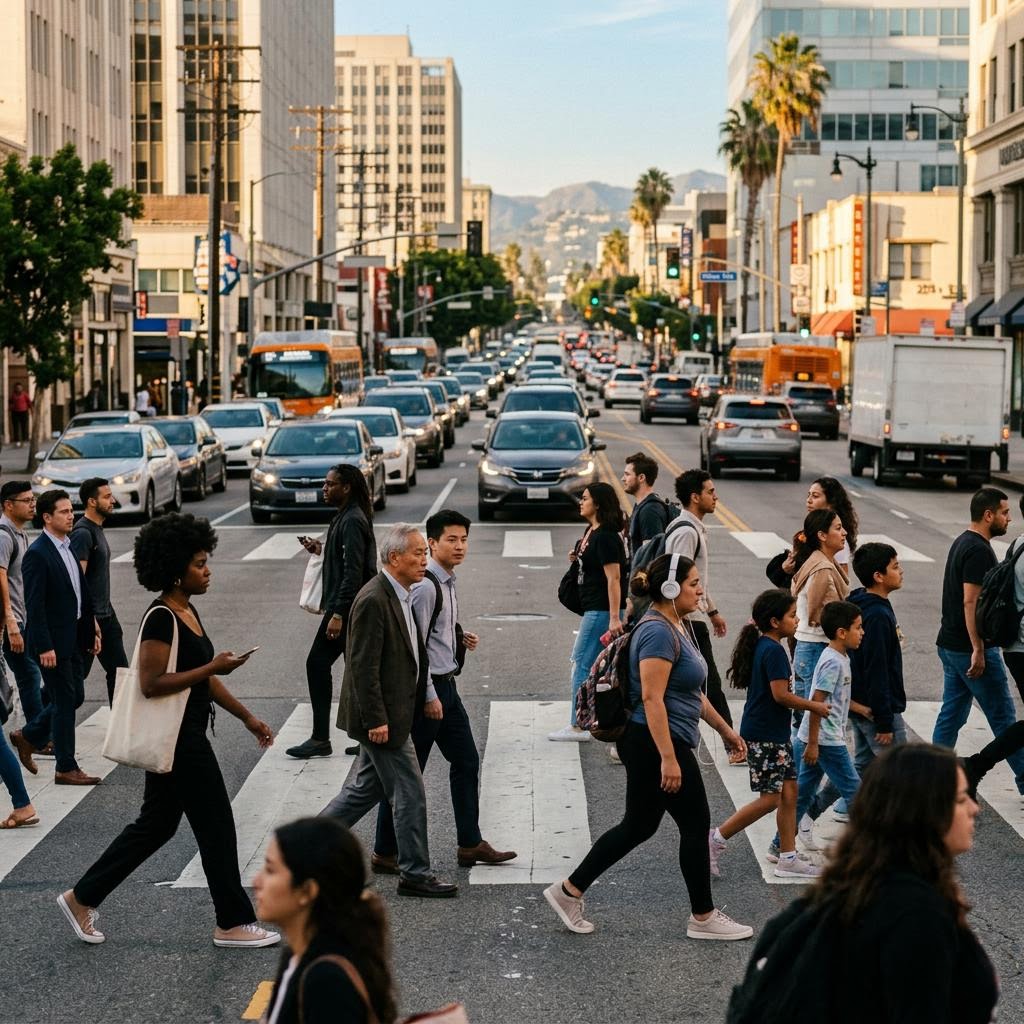
Pedestrians and Traffic Share the Same Crowded City.

Busy intersections, dense traffic, neighborhood streets and commercial corridors bring people into close proximity with moving vehicles. Rideshare and delivery traffic add another layer, while pedestrians travel to work, school, stores and transit. The setting and the details of each crossing matter.
After the accident

Understand What Comes Next.

If you were hit by a vehicle in Los Angeles or Southern California, CD LAW can review the circumstances of the accident and help you understand your legal options.
No Fee Unless We Win