

Discovering that the driver who caused your Los Angeles car accident does not have insurance can create another layer of uncertainty. But a lack of insurance does not necessarily mean there are no options for pursuing compensation.
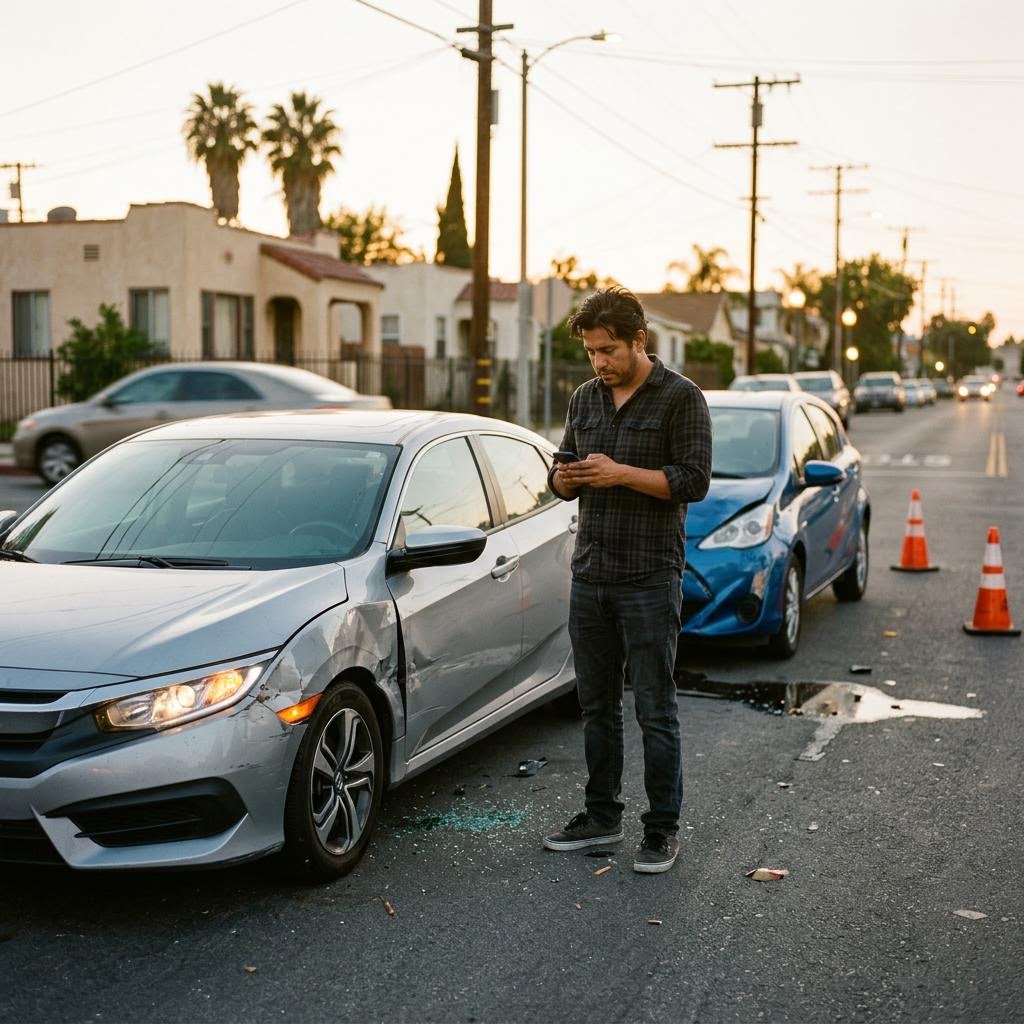
An uninsured driver generally does not have applicable liability insurance available to respond to the accident claim. This does not automatically mean the injured person has no potential options. The absence of coverage from the other driver's insurer does not end the inquiry.
No insurance does not automatically mean no options.
Uninsured motorist (UM) coverage in your own policy may potentially become relevant when the at-fault driver has no applicable liability insurance. Coverage depends on the policy, applicable limits, the circumstances of the accident, and other relevant facts.
Accident-related medical expenses may be relevant depending on coverage and circumstances.
Future treatment may matter when supported by the circumstances and evidence.
Time missed from work may become relevant to the claim.
Serious injuries may affect the ability to earn income in the future.
Pain and suffering may be a component depending on the policy and circumstances.
Applicable categories depend on the policy, evidence and individual circumstances.
Drivers can review their insurance policy and declarations page. Look for sections labeled "Uninsured Motorist" or "UM/UIM Coverage." Contact your insurer if you have questions. An attorney can also help identify what coverage may be available, without pretending to interpret an individual policy.


Preserve available photographs, vehicle damage information and other relevant evidence.
Seek appropriate care and document accident-related injuries.
Determine what insurance information is available for the drivers involved.
Look for uninsured motorist and other potentially applicable coverage.
Keep relevant medical bills, wage information, insurance correspondence and accident documentation.
The available path depends on the accident, injuries, evidence and insurance coverage involved.
The at-fault driver does not have applicable liability insurance available for the claim.
The at-fault driver has liability insurance, but the available coverage may not be enough to address all claimed losses.

Whether on a congested freeway, a busy intersection, a neighborhood street, or a heavily traveled surface road, accidents in the Los Angeles area can quickly raise coverage questions. When an at-fault driver does not have applicable insurance, the circumstances and available policies become central to what happens next.
Hit-and-run accidents can create additional complications—evidence may be limited, and identifying the driver may not be possible. Whether any applicable coverage exists depends on the specific policy and circumstances. Not all policies respond the same way to hit-and-run accidents, and coverage is not guaranteed.